
AC repair in San Francisco, CA
Connect with a local provider for air conditioner repair in San Francisco.
AC Repair
TownSan Francisco, CA
CountySan Francisco
ZIP94102, 94103, 94104, 94105, 94107, 94108, 94109, 94110, 94111, 94112, 94114, 94115, 94116, 94117, 94118, 94121, 94122, 94123, 94124, 94127, 94129, 94130, 94131, 94132, 94133, 94134, 94158
- 5years of experience
- 2,500customers served
- 14team members
- Since 2021serving homeowners
Cooling issues across San Francisco’s varied neighborhoods
San Francisco neighborhoods differ sharply, from the dense flats of the Mission and SoMa to the foggier western blocks of the Sunset and Richmond. Air conditioner repair in San Francisco can involve older Victorians, Edwardian flats, converted warehouses, high-rise condominiums, and newer infill homes. Hills, marine wind, and neighborhood-by-neighborhood temperature changes can affect how cooling equipment runs. We connect callers with independent local providers who can assess the equipment at the property.
Roads, commutes, and access
The city’s steep streets and compact block layout can affect access to rooftop condensers, rear yards, and mechanical closets. Areas around Van Ness Avenue, Market Street, and busy neighborhood corridors may also require clear coordination for technician access and building entry.
Renovated homes and additions
Many San Francisco homes have been remodeled over several decades. An addition, attic conversion, or finished basement may have duct runs, supply vents, or return air vent locations that differ from the original portion of the house.
Apartments and rental buildings
Multi-family buildings are common throughout the city, especially in neighborhoods with flats and apartment houses. A provider can determine whether a cooling issue is limited to one unit, a shared electrical component, or equipment serving multiple spaces.
Hills, wind, and exposure
Homes on Twin Peaks, Nob Hill, and other elevated areas can have different wind exposure than sheltered blocks. Outdoor equipment location, sun exposure, and wind-driven debris can influence condenser operation and airflow around the unit.
How air conditioner repair works in San Francisco homes
Homes in San Francisco may use ducted split systems, heat pumps, packaged equipment, ductless wall units, or room units. A local provider starts air conditioning repair by asking what the system is doing, then checking the thermostat setting, air filter, return air vent, and supply vents. Low airflow can come from a clogged filter, blocked grille, duct restrictions, a blower problem, or a frozen evaporator coil.
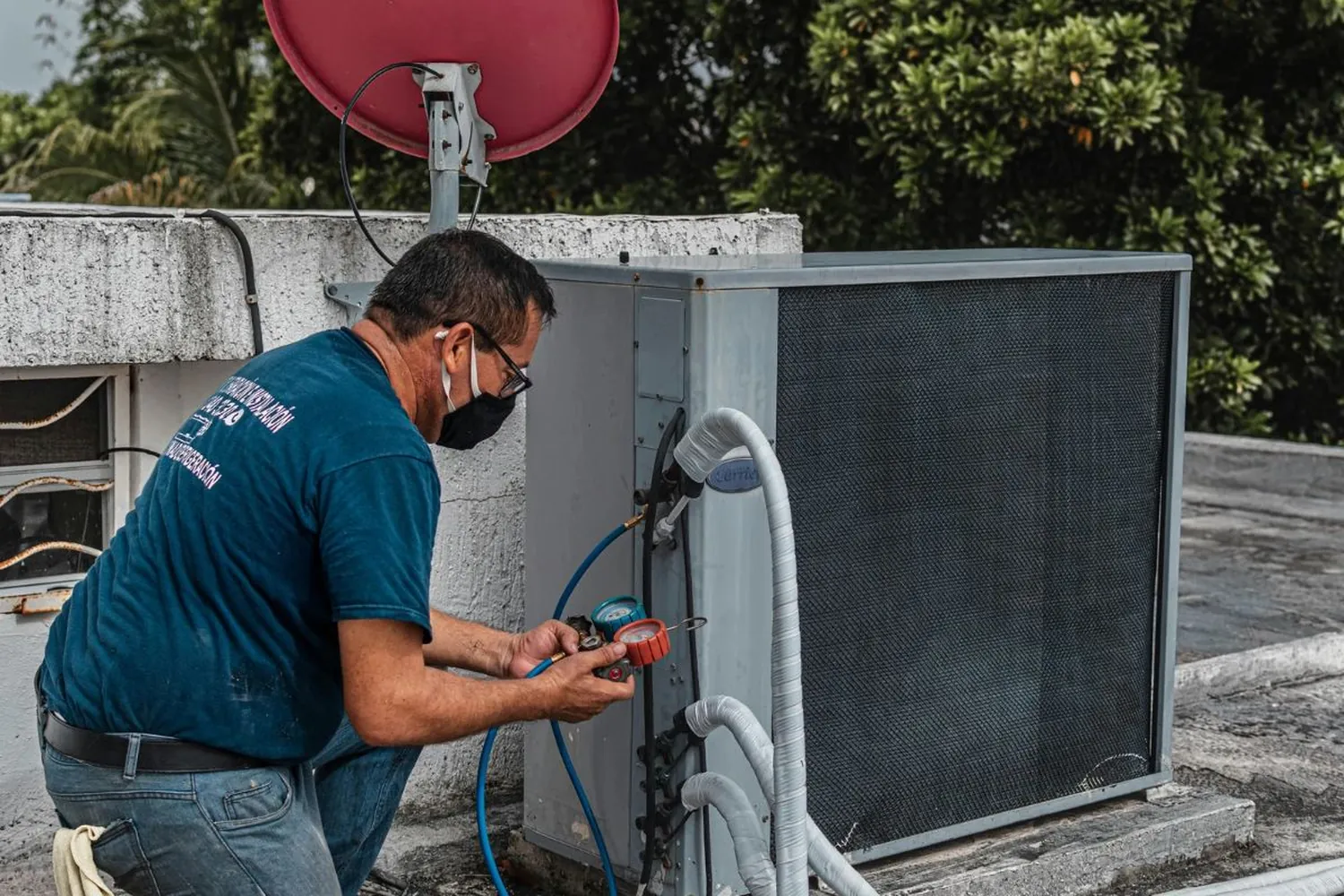
For an ac repair visit, the technician who comes out can inspect the indoor and outdoor equipment, electrical connections, controls, and condensate drainage. They may test the circuit breaker, contactor, capacitor, blower assembly, refrigerant pressures, and temperature difference across the coil. A dirty condenser coil or restricted evaporator coil can keep a system from moving heat effectively.
AC Repair California is an advertising and referral service. Since 2021, the service has connected homeowners with independent providers for jobs such as air conditioner service, diagnostics, and repairs. The provider can explain findings, identify parts that may be needed, and discuss whether an ac tune-up or other seasonal maintenance is appropriate for the equipment.
AC repair work in San Francisco
| Part | What it does | Signs it is failing |
|---|---|---|
| Air filter | Captures airborne particles before air moves through the system. | Reduced airflow, dust buildup, or a visibly dirty filter. |
| Thermostat | Sends cooling instructions based on the selected temperature. | Incorrect readings, no display, or cooling that does not match the setting. |
| Condensate drain | Carries moisture collected during cooling away from the indoor unit. | Water near the unit, a full drain pan, or a shutoff switch stopping operation. |
| Blower assembly | Moves conditioned air through ducts and into rooms. | Weak airflow, unusual noise, or air that stops moving while the system runs. |
| Outdoor condenser | Releases heat from the home to the outdoor air. | Warm indoor air, unusual outdoor-unit noise, or a unit that does not run. |
San Francisco weather and cooling equipment
San Francisco’s cool marine conditions mean that cooling use can be very different from one neighborhood to another. Inland-facing and sunnier areas can warm substantially during late-summer and fall heat events, while western neighborhoods often receive fog and wind. Dust, leaves, and outdoor debris can still collect around equipment during periods of limited use. Seasonal maintenance can help identify filter, drainage, coil, and electrical issues before a hot spell puts the system under heavier demand.
Where we work in San Francisco
Also nearby: Daly City, Brisbane, South San Francisco, Oakland, Alameda, Sausalito.
Mission District
Older flats, mixed-use buildings, and sunnier conditions can create different cooling loads than western neighborhoods.
Sunset District
Fog, wind, and closely spaced homes are common considerations for outdoor-unit placement and ventilation.
Richmond District
Many homes here are near the coast and may experience cool, breezy conditions for much of the year.
SoMa
Lofts, apartments, and newer condominium buildings can have building-specific access and equipment arrangements.
Noe Valley
Hillside homes and additions may have mechanical equipment in attics, garages, or tight utility areas.
Bernal Heights
Elevated blocks and remodeled homes can have varied sun exposure and duct layouts.
San Francisco air conditioner questions
Which San Francisco ZIP codes and sections can be connected with a provider for cooling work?
We connect callers across San Francisco, including areas associated with ZIP codes from 94102 through 94134, as well as 94158. Availability depends on independent providers serving the address and the type of equipment involved.
How do Victorian and Edwardian houses in Pacific Heights or the Haight affect air conditioner service?
Older homes may have later-added ductwork, limited mechanical space, older electrical layouts, or rooms with different sun exposure. The provider can inspect the actual installation rather than assuming the original house layout matches the cooling system.
What should condo owners in Mission Bay or townhouse residents near Dogpatch expect when the AC is not cooling?
Condominiums and townhouses may have equipment on balconies, roofs, closets, or shared mechanical areas. The technician may need building access procedures and can identify whether the problem is inside the residence or involves equipment assigned to that unit.
Why can September heat in San Francisco reveal an air conditioning problem?
September is often among San Francisco’s warmest months, and an infrequently used system may be asked to run for long periods. A dirty filter, weak capacitor, frozen coil, or dirty outdoor coil may become more noticeable during that demand.
When does repairing make sense versus replacing an aging system in a Sunset District home?
A provider can consider the equipment condition, the specific failed component, refrigerant type, airflow, electrical condition, and repeated repair history. They can then explain repair options and replacement considerations for that home’s layout and cooling needs.
Need air conditioner repair in San Francisco?
Tell us your town and what is happening.